
reclaiming our voice in LIS
This past year I was fortunate to play a role in evaluating a grant that funded storytelling initiatives in public libraries for system-impacted people. As ever, it was incredibly inspiring to see and hear what public libraries can do, especially in partnership with other organizations in their communities. Whereas I have previously been involved in a number of projects related to library services for system-impacted people, this was the first I know of that focused on storytelling. Project partners helped to bring their storytelling skills to the communities through library programs. Not only did participants reclaim their voices and narratives, but library workers also regained a sense of purpose and were inspired to rethink their roles in their communities. Through working on the project, I also came to think a lot about my voice, and about the collective voice of librarianship.
It is not new to me that the bureaucratic and patriarchal roots of librarianship contributed to its long purported legacy of “neutrality.” Of late, I have been looking outside of LIS for instances of people reclaiming their narratives and their voices, and assembling a “critical vocabulary” for LIS, as it seems that we lack a lot of the language that is needed to understand and retell the lessons we have learned from our own experiences. I will be excited to share more on that project in the near future.
Meanwhile, I wanted to share an article I read today, “Never eat the candy on your pillow: reentry politics,” which relates, and really moved me. Here is a quote:
With each new day, the barriers I built against politics crumble a little more. I now understand that my involvement is not a choice, but a necessity. To remain silent is to consent to the suffering of others. My reluctance is fading, replaced by a quiet conviction: that love, when practiced deliberately, is a political act. It is in these moments that I find purpose—not in grand gestures or headlines, but in the gentle persistence of kindness, in the courage to care when the world says not to bother. My “political” journey has only just begun, but I vow never again to underestimate the power of showing up, of feeding the hungry, of bearing witness, and of loving without reservation.
https://prismreports.org/2026/02/24/reentry-politics-community/
Credit: Designed by Rikki Li
Friends working in public libraries understand how much this can be true. To that point, my thoughts are with the Seattle Public Library as they advocate for their patrons who are unhoused against unfair security policies. I also want to acknowledge Derek R. Trumbo, Sr., and thank him for sharing his profound experience and lesson!
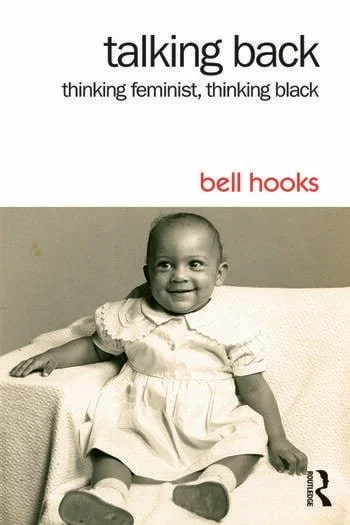
bell hooks said, in talking back: thinking feminist, thinking black::
To understand that finding a voice is an essential part of liberation struggle–for the oppressed, the exploited a necessary starting place–a move in the direction of freedom, is important for those who stand in solidarity with us. The talk which identifies us as uncommitted, as lacking in critical consciousness, which signifies a condition of oppression and exploitations, is utterly transformed as we engage in critical reflection and as we act to resist domination. We are prepared to struggle for freedom only when this groundwork has been laid. (p. 18)
I am reminded that I created this website at a time when I was desperate for a place to share the ideas I was exploring. It was a small step, a safe place. The work has grown, along with my vocabulary and my community. I still have a terrible fear of speaking in public, I am an introvert, I am imperfect, and I am learning. But I am practicing here and there using my voice whenever I hear it calling, saying “speak up!,” and I know that I am not alone. It is not something to be ashamed of, it sets an example that others can follow, just as I look to other brave people who are doing the same all around me.